Pages

background

Tuesday, January 27, 2015

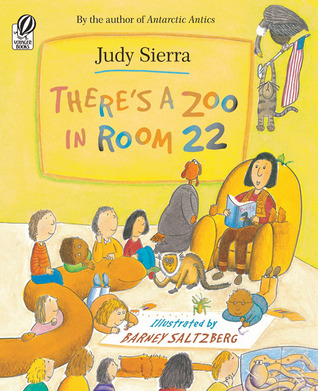
THERE'S A ZOO IN ROOM 22 by Judy Sierra

School Poetry


Sierra, Judy. 2000. THERE'S A ZOO IN ROOM 22. illustrated by Barney Salzburg. San Diego, CA: Gulliver Book Harcourt, Inc. ISBN 9780152020330.   


The students in Room 22 ask their teacher, Miss Darling, for a class pet. The kids in Room 22 have a very special teacher, for instead of just one pet, she gives them a whole pet alphabet. From Anaconda Amanda to a zorilla, the students and Miss Darling have a zoo in their classroom by the end of this book. This poetry book is a must-have for a school library, and a great read aloud.  The students will laugh out loud at the antics in the book. The best part.... finding out at the end what a zorilla is. 

Each letter of the alphabet gets it owns poem in this book. All the poems are rhyming poems, and with the familiar rhythm and topic, they will all appeal to young children. Many of the poems have an AB rhyming pattern, but a few have different patterns, such as an AAAB rhyming pattern. The poems are also filled with alliteration.

The poems are laid out in alphabetical order, with each poem getting its own page. The illustrator, Barney Salzburg, uses pencils and watercolors to create cartoon illustrations. The illustrations truly add humor to the poems. For example, the poem "Return to Sender: Jaguarundi", has a detailed illustration showing the jaguar attempting to escape from his box.  You can also see the children and other animals from previous pages peeking out the school windows. 

Spotlight Poem 

Iggy Iguana

Meg put Iggy on her shoulder -- 
He's a super shoulder holder.
Moments later, he grew bolder,
And he climbed up on her head.

Now begins the part that's creepy --
Our iguana, feeling sleepy,
Made Meg's hair into a teepee,
And her head is now his bed.

Activities

The above poem is my favorite from the book THERE'S A ZOO IN ROOM 22. I think for young students, especially Pre-K and K, you could start off by singing the song, "Head, Shoulder, Knees, and Toes." 

While most children's poems have an ABAB rhyming pattern, this poem has a different pattern. After reading the poem a few times, have students identify the rhyming words. Students can even name the rhyming pattern in the poem.

A post reading activity for the entire book would be for the class to make their own alphabet poetry book. The topic could be pets, just like in this book, or you could have the students choose another topic. Wild animals or zoo animals would be a good topic. 


Sunday, January 25, 2015

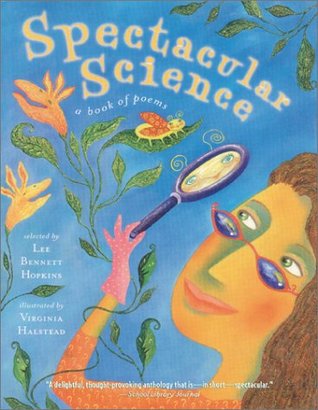
SPECTACULAR SCIENCE: A BOOK OF POEMS selected by Lee Bennett Hopkins

Hopkins Collection

Hopkins, Lee Bennett. 1999. SPECTACLUAR SCIENCE: A BOOK OF POEMS. illustrated by Virginia Halstead. New York, NY: Simon & Schuster Books for Young Readers. ISBN 978069851209

This book is a brilliant compilation of poems selected by Lee Bennett Hopkins, all with the theme of science. The poems cover science themes from biology, to chemistry, physics, and more. Each poem was well chosen for elementary age children. Most of the poems are rhyming, but all of the poems have a definite rhythm that will make it easy and enjoyable for children to read along with the adult. The 15 poems included in this compilation have the ability to draw students into science and literature. 

The illustrations by Virginia Halstead are fantastic and add a sense of playfulness to the poems. The colors are bright and appealing to the eye. The oil pastels and color pencils add a visual interpretation to the poems, but also can feed children's imaginations. 

Spotlight Poem


The Seed
Aileen Fisher

How does it know,
this little seed,
if it is to grow
to a flower or weed,
if it is to be
a vine or shoot,
or grow to a tree
with a long deep root?
A seed is so small,
where do you suppose
it stores up all
of the things it knows?

(excerpt from SPECTACULAR SCIENCE)

Can't you hear this poem being read by a group of children, complete with hand made props out of construction paper. That is my favorite thing about this book of poems, you can visualize these poems so well, that students would be able to make their own props and act out these poems. 

Activities for the Classroom

The first poem in the book is titled, What is Science?, and can be used at the beginning of the year to start conversations with students about what science is and what scientists do. 

Many of the poems have questions about science, and show that our curiosity is a way of exploring science. After introducing some of these poems, the students can write their own questions they have about the world and illustrate. 

Saturday, January 24, 2015

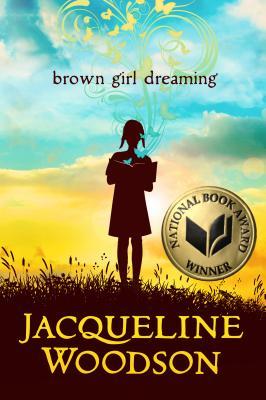
BROWN GIRL DREAMING by Jacqueline Woodson

African American Poetry


Woodson, Jacqueline.  2014. BROWN GIRL DREAMING. New York, NY: Nancy Paulsen Books. ISBN 9780399252518


Brown Girl Dreaming is a collection of free verse poems written by the African American poet, Jacqueline Woodson. The poems are memoirs of her life as she grew up as an African American in the 1960s and 1970s, in both the North and the South. Each poem fits together to give the reader a glance into Woodson's childhood as she tries to find where she fits in. As a child, she spent half of her years in the North where she was teased for being a Jehovah's Witness, meaning she followed rules many of her friends didn't understand. The other half of each year was spent in the South with her grandparents, where she was teased for her funny way of speaking. Woodson was compared by teachers to her highly intelligent sister, but Woodson had trouble reading. Through the poems, the reader sees Woodson grow and become more aware of the Civil Rights Movement. She also finds support through her family and realizes her love of stories and writing.

This book, written in free verse poetry, will appeal to many ages of readers. Children, especially middle grades, will enjoy reading the story of Jacqueline and will be able to relate to her experiences. Adults, as well, will relate to the experiences in the elegant poems, and will appreciate the situation and time. Each poem stirs up emotions in the reader, and are beautifully written. Full of imagery, the reader is able to 'step' into Jacqueline's life. This true life memoir has the ability to encourage children and young adults of any race who are struggling with school, be it academics or socially.

Spotlight Poem

on paper

The first time I write my full name

Jacqueline Amanda Woodson

without anybody's help
on a clean white page in my composition notebook,
    I know

if I wanted to

I could write anything. 

Letter's becoming words, words gathering meaning, 
    becoming
thoughts outside my head

becoming sentences

written by

                      Jacqueline Amanda Woodson

Excerpt from BROWN GIRL DREAMING by Jacqueline Woodson


The above poem is one of my favorites from the book because it shows the passion that Jacqueline has for writing.  There is also a poem titled "Composition Notebook" in which Woodson describes with beautiful imagery the way her first composition notebook smells, feels, and looks. "Hard not to smile as I held it, felt the breeze as I fanned the pages" (Woodson 2014, p. 154). The poets use of imagery allows the reader to experience in their minds the things that Jacqueline experienced growing up. 

The first pages of the book includes a family tree of the Woodson family and the Irby family.  The Irby family is Jacqueline's mom's side of the family, and the grandparents that she visited each summer in Greenville, South Carolina. In the conclusion of the book are actual photographs of Jacqueline's family. I found myself wanting to know more about each character at the end of the book. 


Activities for the Classroom

There are many teaching ideas and ways to share this book with your students, particularly grades 4 - 8.  During a unit over the Civil Rights Movement, this book would be a great extension. The first poem in the book, titled "February 12, 1963", has references to sit ins and marching for freedom. Begin your lesson or unit with this poem, along with some top news stories from 1963. 

Throughout the book, Jacqueline Woodson speaks of her composition notebook. This notebook is a significant object throughout the book and Woodson's childhood. Allow students to discuss a significant object in their life, and how this object impacts their life and says about themselves. 

Follow up with some of Jacqueline Woodson's pictures books that are set in the 1960s and compare them to Woodson's memoir, BROWN GIRL DREAMING.  Following is a list of Woodson's picture books that would tie in wonderfully with this book.

Woodson, Jacqueline. 2001. THE OTHER SIDE. illustrated by E.B. Lewis. New York, NY: Putnam Juvenile. ISBN 9780399231162

Woodson, Jacqueline. 2013. THIS IS THE ROPE. illustrated by James Ransome. New York, NY: Nancy Paulen Books. ISBN 9780399239861


Awards for BROWN GIRL DREAMING

National Book Award for Young People's Literature, 2014