Pages

background

Monday, March 30, 2015

THE LIGHTNING DREAMER by Margarita Engle

Biographical Poetry


Engle, Margarita. 2013. THE LIGHTNING DREAMER: CUBA'S GREATEST ABOLITIONIST. New York, NY: Houghton Mifflin Harcourt. ISBN 9780547807430

Set in a Spanish colony of Cuba in 1827, when the island was far from being free of slavery, penalties for run away slaves were harsh, and censorship was high. Margarita Engle, in her own words, tells the story of a bold woman, Gertrud Gómez de Avellaneda, who became a poet and one of the most daring and outspoken abolitionists of her time. Avellaneda, also known as Tula, falls in loves with stories, but is not allowed to go to school as girls were not allowed an education at this time in Cuba. Tula also belongs to an aristocrat family, who owns slaves, but is filled with guilt over the slaves in her family. Tula is expected to marry a rich, aristocrat man, but wants to marry for love. At the age of fourteen, Tula resists her arranged marriage. One day, she discovers banned books by a rebel poet. These poems speak deeply to Tula, and so begins her writing. 

Margarita Engle uses powerful words to write this novel in free verse about the life of Gertrud Gómez de Avellaneda (Tula), the Cuban feminist and abolitionist. While the novel is historical fiction, Engle researched the life of Tula carefully and included her references. The book is written in five parts, each part containing poems and taking place in a different year of Tula's life. The poems are titled by the name of the speaker, such as Tula, Manuel, and Caridad. All of these characters are someone special in Tula's life. The majority of the book is told from Tula's point of view, but it is more compelling, because we can see Tula through the eyes of these other characters. 

Even though there are no illustrations in the novel, Engle does an outstanding job with imagery and emotion, so that the reader can visualize the events and feel the emotions along with the characters. Even though this verse novel is set in the 1800s, many young people will be able to relate to the experiences. The book will stimulate various emotions, feelings, and moods.

Spotlight Poem

Tula

The only thing I can change
is myself. There is no way to alter
the orphans' loss, or my own 
sorrowful home.

Fourteen is such a cruel birthday.
My mother and grandfather are already planning
to auction me away
to the highest-bidding
rich man.

(excerpt from THE LIGHTNING DREAMER by Margarita Engle)

Classroom Activities

For a text to self connection, prior to reading the poem, have students discuss or write about what it is like to be fourteen. After reading the poem, have them compare their life to Tula's life at fourteen.  Why does Tula say that "Fourteen is a cruel birthday"?

This novel would be a perfect novel to go along with study of the 19th century abolitionist movement.  The reading teacher, Social Studies teacher, and librarian can collaborate to plan for inquiry for the students to find out more about Avellaneda and other abolitionist.

Students could find cultures where arranged marriages still happen and discuss. 


Awards for THE LIGHTNING DREAMER

Teaching for Change 2013 Favorite
Best 15 Latino Children's Books for 2013
ALSC Notable Children's Book for 2013
2014 Notable Trade Books for Social Studies
2014 Pura Belpré Honor Book


Friday, March 27, 2015

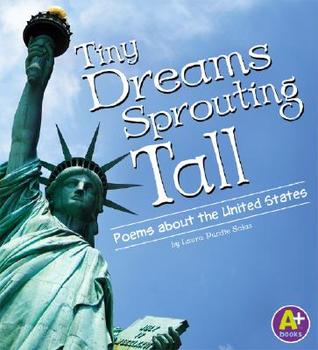
TINY DREAMS SPROUTING TALL by Laura Purdie Salas

Poetry for Social Studies


Salas, Laurie Purdie. 2008. TINY DREAMS SPROUTING TALL: POEMS ABOUT
THE UNITED STATES. Mankato, Minnesota: Capstone Press. ISBN 9781429612081


In the younger grades, a large part of Social Studies is learning about the symbols and landmarks of America. TINY DREAMS SPROUTING TALL is a collection of fifteen original poems by Laura Purdie Salas featuring objects, places, or people found around the United States. It has a range of topics, from the Statue of Liberty, the Bald Eagle, the Grand Canyon, Jazz, and Martin Luther King, Jr.  Salas has included a variety of forms of poetry throughout the book, some rhyming, others free verse. Salas writes a cinquain, an acrostic, a limerick, and a diamante in this book of poems. The poems are easy and fun to read, however, the simplicity is powerful throughout the book. Even though the poems are short and simple, they are packed with imagery and opportunity for discussion in the younger grade Social Studies class.

The book uses colorful photographs throughout, which are credited on the copyright page. The gorgeous photographs compliment each poem, showing the eagle soaring and the beauty of the Grand Canyon. The photographs are large and will be interesting to children.

Definitions for the different types of poems, along with the page numbers each type of poem can be found, are located at the end of the book. The book also includes a page defining a few poetry words, such as alliteration and rhythm. Some of the advanced words throughout the book are defined in an included glossary. This book will be very helpful for young readers, and a great compliment to a Social Studies unit.

Spotlight Poem


Lady Liberty

Liberty carries a golden torch
She wears a copper skin
She's broken free of all her chains 
and sways upon the wind


Classroom Activities


After introducing the poem, have students practice reading the poem aloud. Students can make props, such as a Lady Liberty crown, to use while performing the poem. 

Have students create a video, using iMovie, Animoto, or Photo Story, highlighting symbols, people, or landmarks of America. Students should include a reading of a poem from the book about the object, person, or place they will make the movie about. 


Sunday, March 22, 2015

A STRANGE PLACE TO CALL HOME by Marilyn Singer

Science Poetry


Singer, Marilyn. 2012. A STRANGE PLACE TO CALL HOME: THE WORLD'S MOST DANGEROUS HABITATS & THE ANIMALS THAT CALL THEM HOME. illustrated by Ed Young. San Fransisco, CA: Chronicle Books. ISBN 9781452101200.


This collection of fourteen poems give the reader a look at relatively unknown creatures, that live in extreme habitats, and who have adapted to challenging conditions. Each poem features a specific animal and the habitat in which it dwells. The reader will find a penguin that lives in a dessert, a monkey who loves the snow, and a blind albino fish living in a dark cave. After reading the poems in this collection, the reader will be anxious to learn more about these animals featured, and their extreme habitats.

Marilyn Singer uses various forms of poetry throughout the book to highlight the strange creatures and their harsh environments. Singer includes free verse, triolets, haiku, sonnet, cinquain, villanelle, and terza rima poems in this collection. In the back of the book is included a list of each poem and the form it is written in. Each poem is unique in its own way, and has a distinctive rhythm that will appeal to many ages of children. Since the topic of these poems are animals that will be unknown to many children, the poems will stimulate curiosity.

The illustrations in A STRANGE PLACE TO CALL HOME are created by Ed Young, winner of the Caldecott Medal. Young uses torn paper collage to create to astonishing illustrations that accompany each poem. Young's use of the torn paper depicts the movements of the animals, as well as the harshness of the habitat.

Spotlight Poem


CITY LIVING
urban foxes

They have
quiet forests and 
fields for sheds, flowerbeds;
forfeited wild berries for shrimp
lo mein.

It seems
an easy life,
but in close quarters, cars,
capture, and contagion take
their toll.

Foxes
adapted to
city living find it
full of plenty--but plentiful
in risk. 


Classroom Activities


This poem can be a start of discussions of how humans have changed animals habitats. Discuss why many foxes now live in urban areas, instead of in the forests. Have a class discussion of the risks that urban foxes face that Singer refers to in the last stanza of her poem. 

All of the poems in this collection could accompany a science unit for habitats or adaptation. The teacher or librarian could assign groups a poem, and the students would be responsible for finding more information about the highlighted animal. After completing the inquiry, students should be allowed to share with the class their poem and facts about the animal. 

The poems are written in various forms, some of them strict forms that have been given names. With the class, go to the Poetry Foundation glossary page that explains the poetry forms. After the students have learned about the forms of poetry included in the book, allow them to choose their favorite form and write their own poem about an animal. 

Sunday, March 1, 2015

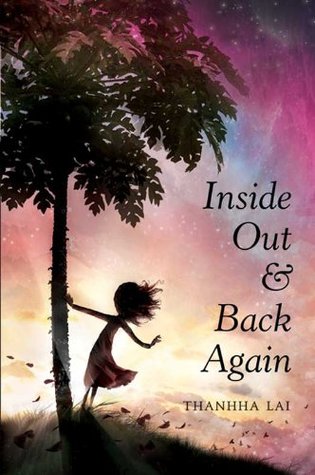
INSIDE OUT AND BACK AGAIN by Thanhha Lai

Verse Novel

Lai, Thanhha. 2011. INSIDE OUT & BACK AGAIN. New York: HarperCollins Publishers. ISBN 9780061962783.


Summary


Inside Out & Back Again is a novel in verse narrated by a ten year old girl, Hà, who lives in Saigon. The markets and traditions of Saigon is all she has known her whole life, and all her friends are here in Saigon. The Vietnam War has come to her home, and her family must flee their home. They are forced to choose only what will fit into a small bag to take with them. Hà and her family board a ship, along with hundreds of other refugees, and head toward their new life and new hope. 

The verse novel takes us through a year of change for Hà and her family as they try to make a new home for themselves in Alabama. They are met with coldness from their neighbors, and Hà and her brothers are left out at school. Hà hates this new land and the food at first, but she learns to lean on her family and trust friends. 

Critical Analyses


Inside Out & Back Again is beautifully written and evokes numerous sensory images. Hà's favorite food is the papaya, and throughout the book the reader can taste and feel the papaya with the sensory images that Thanhha Lai uses. The poetic form of the book is almost a must for this story, and I don't think it would be as good written in prose. The lines pause in perfect timing, so that the reader is forced to pause and take in the words. The short chapters/poems will be appealing to the young adult reader, however, even though the chapters are short they are packed with meaning. Filled with metaphors and similes, the author artistically places Hà's joys, fears, and other emotions into the book. 

The novel is told in first person and in the present tense, so the reader is able to experience Hà's year of change through her own words. At the end of the book is included an author's note, and we find that the events in this book are events that happened to the author, Thanhha Lai.  

Spotlight Poem


Two More Papayas

I see them first.

Two green thumbs
that will grow into
orange-yellow delights
smelling of summer.

Middle sweet
between a mango and a pear.

Soft as a yam
gliding down
after three easy,
thrilling chews.

April 5


Classroom Activities

Prior to reading the above poem, show students papayas, or images of papaya trees. If possible, have small slices of papayas for students to eat. After reading the poem, discuss students favorite foods. If you have students that are from other countries, allow them to talk about foods they miss from their home country. 

Have the students write a poem of their favorite food, describing the look, feel, and taste of the food.

Before introducing the book, ask students what they already know about the Vietnam War. Show photographs from this era. Research the Vietnam War in great detail while reading this novel with your class. Have students find out the role of Ho Chi Minh and communism in the war. 

The novel begins and ends on Têt, the Vietnamese New Year. Add this day to the celebrations you have in class, and have students explore more about the celebration. Have discussions on how Hà's life has changed from one Têt to the next Têt. Then allow students to write about, or share in other ways, how they have changed in the past year and what their new wishes are for the coming year. 


Awards for INSIDE OUT & BACK AGAIN

National Book award for Young People's Literature 2011

John Newbery Award 2012